
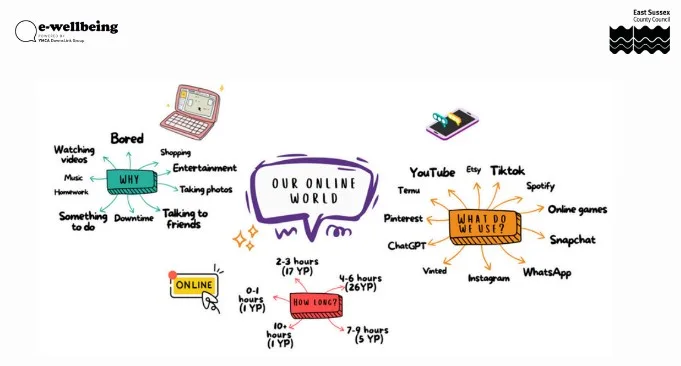
Young people across Sussex are calling for greater support, better digital literacy and safer online spaces, according to insight gathered through a series of youth engagement workshops commissioned by East Sussex County Council (ESCC).
Delivered by our Youth Engagement team through e-wellbeing, the project commissioned by ESCC explored the realities of young people’s online lives and the changes they believe would help younger generations navigate the digital world more safely. The findings will help inform the development of a future whole-school approach to online wellbeing and digital safety across East Sussex.
 Developed with young people
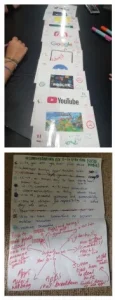
The project brought together young people aged 14–16 from schools across East Sussex, Brighton & Hove and West Sussex. Through a series of workshops, participants shared their experiences of both the benefits and harms of online life, while developing recommendations for schools, parents, services and policymakers. A key objective was to ensure young people’s voices directly influence future policy and service provision. 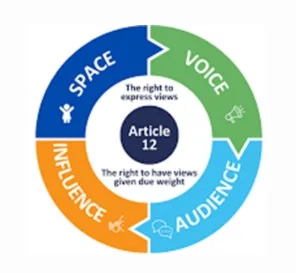
As a youth voice-led organisation, we believe the most effective solutions are developed with young people, not simply for them. This project created a valuable opportunity for students to speak openly about their online experiences and shape conversations around digital wellbeing and safety.
What young people told us
While national discussions often focus on screen time and restrictions, young people shared a more nuanced picture.
They told us that:
- They understand many of the risks associated with social media and online platforms.
- Social media can have a negative impact on mental health, self-esteem and wellbeing.
- Many feel pressure to stay online because it is where friendships, communities and social experiences take place.
- Stepping away from social media can feel difficult, even when they recognise it is affecting them negatively.
- They want a better understanding of how online platforms, algorithms and engagement tools are designed to influence behaviour.
One of the strongest messages from the workshops was that young people want to feel more in control of their online lives.
The importance of digital literacy
Participants repeatedly highlighted the need for earlier and more meaningful digital literacy education.
Young people said they wanted support to better understand:
- Algorithms and personalised content
- Addictive and engagement-based platform design
- Online pressure and comparison
- Digital wellbeing and healthy online habits
- Managing self-esteem and confidence online
- Where to seek help when something doesn’t feel right.
As Harriet Peach, Youth Engagement Manager at YMCA DownsLink Group, explained:
“Young people tell us they want to feel more in control of their online lives. Education around how platforms really work – and support to manage pressure and digital wellbeing – would have helped them from a much younger age.”
Restrictions alone are not enough
The government’s proposed ban on social media for under-16s has reignited debate about online safety.
Our engagement work suggests that while many young people welcome greater protections, lasting change will require a broader response.
Young people consistently highlighted the need for:
- Safer platforms by design
- Greater accountability for technology companies
- Better education around online risks and digital wellbeing
- Support to navigate online pressures
- Opportunities for their voices to be heard in decision-making.
Their feedback reinforces the idea that online safety is not solely about restricting access. It is also about helping young people understand the digital environments they use every day.
What we’re seeing in other services
These findings align with what we are seeing across our services, where we are also supporting young people dealing with the wider impact – from anxiety to complex safeguarding concerns.
Our WiSE (What is Sexual Exploitation) service supports children and families in Sussex with specific targeted support focusing on online safety, through closed referral by Sussex Police.
While online spaces can provide important opportunities for connection, learning and support, they can also create new pathways for harm. This highlights the need for a coordinated approach that combines prevention, education, safeguarding and platform responsibility.
Influencing future practice across East Sussex
The workshops commissioned by ESCC were designed not only to gather insight but to create meaningful change.
Alongside understanding young people’s experiences, the project aimed to:
- Develop recommendations for younger children
- Create guidance for parents, schools and professionals
- Inform future policy discussions
- Support the development of a whole-school approach to digital wellbeing and online safety across East Sussex
- Ensure young people can see how their feedback contributes to service development and decision-making.
Next steps
The findings from this work will now contribute to East Sussex County Council’s ongoing efforts to strengthen support for children and young people navigating the online world.
Above all, one message emerged clearly from students:
If we want a safer digital world, we need to listen to young people, learn from their experiences and involve them in shaping the solutions.
Learn more about our Youth Voice work:
Resident meetings Six weeks of fun