
Understanding the online environments – and digital harms – that shape children and young people’s lives has become an increasingly important challenge for professionals working across education, health, social and residential care and policing. As digital spaces continue to evolve, so too do the opportunities, vulnerabilities and risks that children and young people may experience within them.
To help address this challenge, YMCA DownsLink Group’s WiSE (What is Sexual Exploitation) team, which has more than 15 years’ experience supporting children and young people affected by exploitation and harm, has partnered with Dr Damon Parsons, forensic psychiatrist, founder of Cyber-psychiatry Education Awareness Research (CEAR), and a leading voice in the emerging field of cyberpsychiatry. Together, they have developed an innovative specialist training programme focused on young people’s online experiences, digital harms and emerging risks.

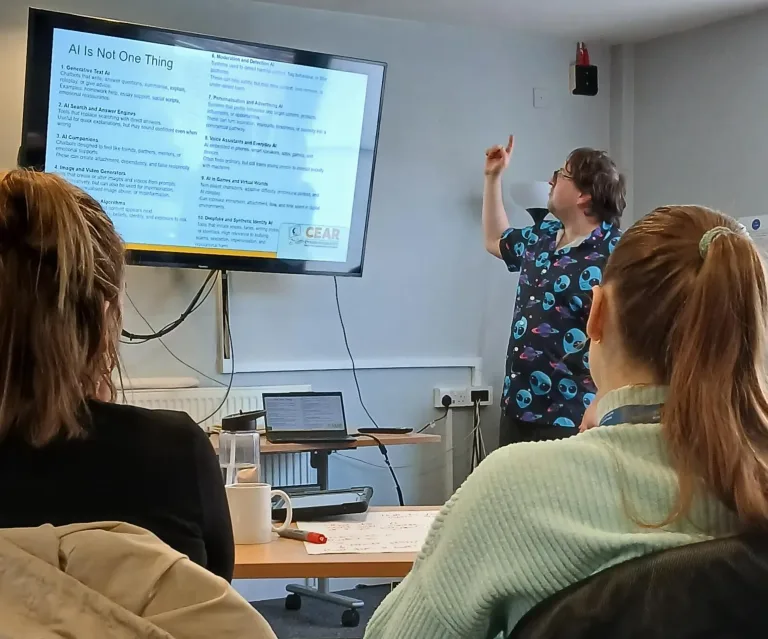
The programme combines cyberpsychiatric research with frontline safeguarding and exploitation expertise, helping professionals develop a deeper understanding of the digital environments in which many young people now form relationships, build identity, seek community and experience risk. It also helps professionals understand how online coercion, grooming and exploitation can sometimes present as choice, consent or typical online behaviour, making concerns harder to recognise and respond to effectively.
Exploring digital harms
Participants explore a range of topics including online exploitation, coercion, harmful content, addictive online design, emerging AI-related risks and the impact of digital environments on young people’s wellbeing and development. The training provides practical tools to help professionals identify concerns, strengthen safeguarding practice and engage more confidently with children, young people and families. All learning opportunities are designed to be solution-focused and include resources that participants can use within their own organisations, helping to extend learning beyond those attending the training itself.
Combining behavioural science, cyberpsychology and frontline practice, the programme helps professionals translate complex concepts into practical approaches they can apply immediately in their day-to-day work. Participants consistently report feeling better equipped to recognise emerging risks, understand online behaviours and respond effectively when concerns are disclosed.
The impact extends beyond those attending the training. Every professional equipped with this knowledge has the potential to influence safeguarding practice and support hundreds of children, young people and families throughout their career.
Early delivery of the programme has generated extremely positive feedback. More than 50 senior professionals, including teachers, social workers, police officers, counsellors and local authority leaders, have already completed the training. This builds on WiSE’s wider track record of training more than 225 professionals to recognise, prevent and respond to exploitation in all its forms.
Recognising the growing mental health implications of online harm, the programme has also evolved to include a specialist pathway for counsellors and therapeutic practitioners.
Feedback from a recent programme delivered to school counsellors was particularly strong, with all respondents saying they would recommend the training to other professionals. Participants described the training as “essential”, “eye-opening” and “the key needed to unlock online understanding”.
One participant commented:
This training is essential for anyone wanting to understand the true impact of the internet on our mental wellbeing.
Another described it as the “best training I’ve been on.”
The programme’s unique strength lies in its combination of research and practice. Dr Damon Parsons brings specialist expertise in cyberpsychiatry and online behaviour, while WiSE practitioners contribute extensive experience supporting children and young people affected by exploitation, coercion and harm. Together, they provide professionals with both the understanding and the practical skills needed to respond effectively to an increasingly complex digital landscape.
The programme is also informed by ongoing engagement with young people themselves. Through YMCA’s Youth Voice work and ongoing engagement with young people, the team is exploring emerging digital trends, risks and opportunities to help ensure future training and resources remain informed by the lived experiences of young people themselves.
As online communities, social media platforms and artificial intelligence continue to evolve, listening to young people’s experiences will remain an important part of understanding both emerging harms and opportunities.
Future plans include ongoing evaluation, exploration of accreditation opportunities and the development of flexible learning opportunities for a wider range of professional audiences. Alongside the established specialist training programme, the team is exploring additional ways of supporting organisations through bespoke packages, resources and wider workforce development opportunities. Opportunities to develop resources for parents and young people will also be explored.
As one participant reflected:
I feel more empowered to support both the children and parents we work with. This is a growing issue that we all need to address.
For more information about CEAR and WiSE’s training and learning opportunities, or to discuss the needs of your team or organisation, please contact: [email protected]