
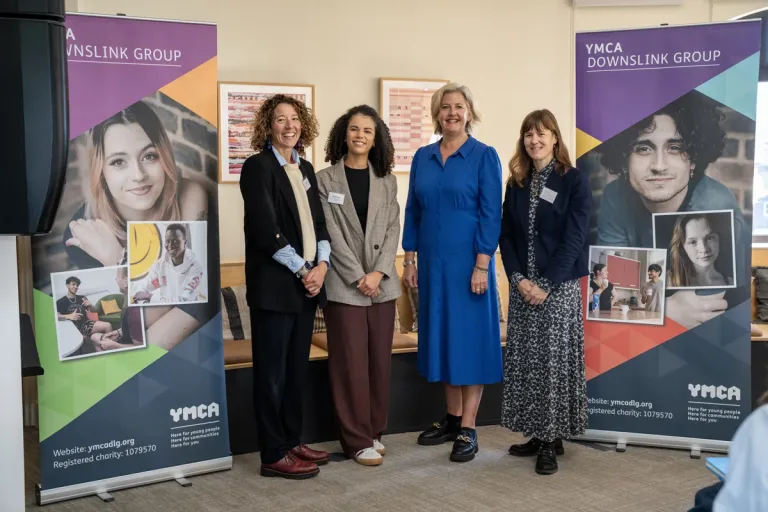
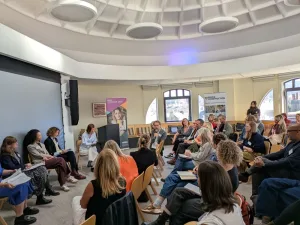
More than 60 leaders, practitioners, academics and partners from across Sussex and Surrey came together in Brighton on 8 October for Turning 18: supporting young people into adulthood, a cross-sector learning event exploring how young people can be better supported as they move from children’s to adult services.
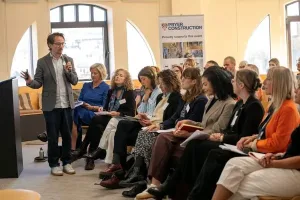 We hosted the event, which focused on findings from an independent review undertaken in partnership with the University of Sussex and Resonant Collaboration, examining the experiences of young people aged 16-19 as they navigate adulthood.
What happens when support needs don’t stop at 18?
The event explored a simple but important question:
What happens when young people reach adulthood, but their need for support does not change?
Presenting the review findings, Professor Michelle Lefevre spoke about the importance of transitional safeguarding and recognising that vulnerability does not disappear when someone turns 18.
“Young people do not suddenly become adults at 18.” 
The review found examples of strong relationship-based practice and dedicated support for young people, while also highlighting challenges around fragmented transitions, information sharing, inconsistent thresholds and coordinating support across multiple services.
We are the system
Alongside identifying challenges, the review also posed a challenge to everyone in the room.
“The system isn’t somewhere else. It’s all of us.” – Colin Michel
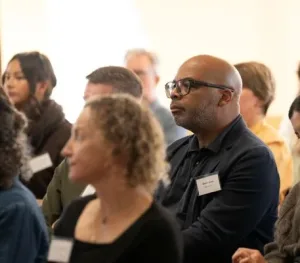 Delegates repeatedly returned to the importance of collective accountability, stronger communication and better partnership working across organisations and sectors.
One observation from the review resonated throughout the day:
“Everybody knows something, but nobody knows everything.” – Michelle Lefevre
Delegates highlighted the challenge of information sitting in different parts of the system, with no single organisation or professional holding the complete picture of a young person’s circumstances.
The ideal versus the reality
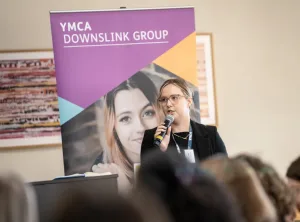 Delegates then heard from Kathy Linford, Supported Housing Manager at YMCA DownsLink Group and former social worker.
Her presentation contrasted the “ideal” transition into adulthood with the reality many young people face.
Ideally, a young person approaching adulthood would have stable relationships, a clear move-on plan, financial security, practical life skills and a strong support network. The reality can often be very different.
One of the strongest messages focused on the importance of practical foundations:
“It’s really important young people have those documents. Otherwise they don’t exist.”
Seeing services through young people’s eyes
Reflecting on the findings, Jess Gibbons, Chief Executive of Brighton & Hove City Council, encouraged attendees to think about services from a young person’s perspective.
“Young people don’t ask which organisation owns this part of the system. They ask: do I feel safe? Do I know what happens next? Do I know who’s alongside me?”
She also highlighted the difference between how organisations and young people often define success.
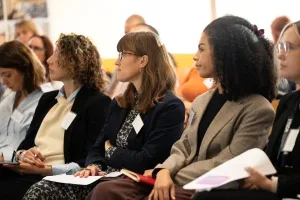 “We often measure activity. Young people measure experience.”
Across the panel discussion, speakers returned to themes including trusted relationships, adultification, mental health, housing and the importance of shaping support around young people’s experiences rather than organisational boundaries.
What delegates prioritised
During the interactive Mentimeter session, delegates identified several shared priorities for action:
- Better communication and information sharing
- Stronger feedback loops between services
- Earlier transition planning
- Relational and trauma-informed practice
- Greater involvement of young people in decision-making
- Stronger partnership working across sectors.
One delegate reflected:
“Recognise WE ARE the system and need to keep convening conversations like this.”
Next steps
Please find resources from the event, including presentation materials, key themes, speaker reflections and Mentimeter responses, on the Turning 18 hub.
The final independent review report will be published soon, alongside further opportunities for partners to engage with the findings and recommendations. We will continue working with organisations across Sussex and Surrey to support learning, partnership working and conversations about how young people can be better supported into adulthood.